 الحياري الإقتصادي اقتصاد سهل يفهمه الجميع
مقالات مشابهة

If the US dollar lost its place at the center of global trade, your cost of living would change permanently.
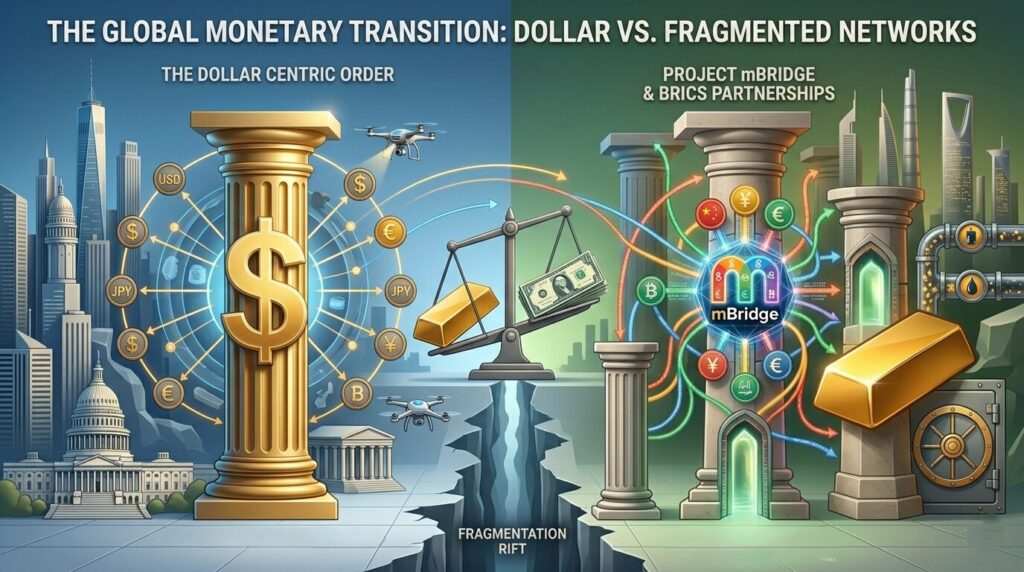
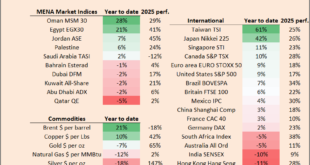
For decades, the dollar has enjoyed an “exorbitant privilege” as the undisputed global reserve currency. Because the majority of foreign reserves are held in dollars and most trade is settled in them, the US can carry trillions in national debt without immediate hyperinflation.
But beneath the surface, an alternative financial arms race is quietly unfolding. A coalition of central banks—including China, Hong Kong, Thailand, the UAE, and crucially, Saudi Arabia—is in the advanced stages of launching Project mBridge, a cross-border digital alternative to the dollar-dominated infrastructure. Its arrival signals a shift from a unified financial system toward a fragmented world of competing networks.
Why Dollar Dominance is Fraying
Dollar dominance relies heavily on two pillars:
The Petro-Dollar System: Established in the 1970s, it ensured global oil was traded exclusively in greenbacks, creating an perpetual baseline demand.
The SWIFT Network: The global messaging rails that route international payments under heavy US influence.
However, the weaponization of the dollar—most visibly seen when the US froze Russia’s foreign reserves—sent a shockwave through global central banks. Nations realized that if their policies clashed with Washington’s, their wealth could be cut off instantly. Driven by this vulnerability and eroding purchasing power from domestic US inflation, central banks are aggressively buying physical gold while building independent payment rails.
Enter Project mBridge
Project mBridge is a multi-central bank digital currency (multi-CBDC) platform designed for direct cross-border wholesale transactions.
Instead of routing through Western intermediary banks and SWIFT, mBridge enables nations to settle trade directly with one another on entirely new, independent technological rails.
The inclusion of Saudi Arabia is a massive structural shift. The historical cornerstone of the petro-dollar is actively expanding ties with the BRICS bloc. China has even built physical gold vaults within Saudi borders, paving the way for trade to be settled directly in local currencies or physical gold. Already, global dollar reserves are on a steady decline toward the 50% threshold as gold rivals US Treasuries as a preferred reserve asset.
The Technology of Absolute Control
While mBridge is framed as a tool for trade efficiency, it highlights a broader macro shift toward Central Bank Digital Currencies (CBDCs).
Unlike decentralized digital assets, CBDCs give central issuers absolute visibility and programmatic control to enforce compliance directly on the ledger. While the US relies heavily on private stablecoins to maintain dollar dominance in digital spaces, eastern nations are deploying state-managed infrastructure. The underlying message is clear: the future of money is digital, centralized, and systematically monitored.
The Cable vs. Streaming Analogy
Critics argue the dollar is too massive to fail, but systemic currency shifts rarely happen overnight. Think of it like the transition from cable TV to streaming:
The Cable Era: Cable once held an absolute monopoly; consumers had no alternative infrastructure.
The Shift: Streaming emerged quietly. It didn’t destroy cable instantly, but it offered a faster, more flexible alternative that chipped away at cable’s market share year after year.
The Result: Cable still exists, but it has lost its dominance.
We are currently in the transition phase. Alternative networks like mBridge provide a functional exit ramp, permanently decentralizing global financial leverage.
How to Position for a Fragmented Future
As global trade rails split, keeping wealth exclusively within a single fiat ecosystem introduces concentrated counterparty risk. When global demand for a currency softens, the issuing nation faces structural pressures that dilute domestic purchasing power.
To insulate capital from a systemic currency reset, traditional wealth preservation principles remain vital:
Tangible Asset Allocation: Transitioning paper liquidity into physical, liquid assets held outside the banking system—such as physical gold and silver—provides a time-tested hedge against monetary debasement.
Systemic Diversification: Relying entirely on traditional banking instruments leaves capital vulnerable to domestic policy pivots and inflationary cycles.
The global financial landscape is shifting to a system of competing networks. True protection requires looking beyond local headlines and ensuring your assets aren’t trapped on an aging highway when the rest of the world takes a new road.
As the financial world keeps moving, it’s super important to know how your investments are doing. If your portfolio is worth more than $100,000, don’t hesitate! Contact us today at Al Hiary Al-Iktissadi. We’re offering a free look at your portfolio to help you understand your current situation and find smart ways to grow your money. Let’s make your investments work harder for you!
Contact us for a free Portfolio Review meeting