 الحياري الإقتصادي اقتصاد سهل يفهمه الجميع

مقالات مشابهة
A $9.6 Trillion Game
Every day, the Foreign Exchange (Forex) market moves an astonishing $9.6 trillion, a figure more than ten times the volume of the entire global stock market. This immense scale creates a powerful allure, promising fast wealth and financial freedom to anyone with a smartphone and a small deposit. It taps directly into our evolutionary hedonistic bias—the innate desire for maximum reward with minimum effort.
The 90/90/90 Reality
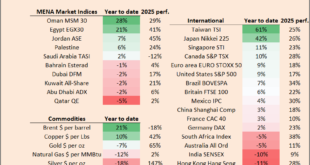
But beneath this glittering surface lies a brutal statistical reality: In the retail trading world, it is widely accepted that 90% of new traders lose 90% of their money in their first 90 days.
Why? In this article we will explore the hidden human psychology trap, the technological forces, and institutional conflicts of interest aligned against you. More importantly, we will reveal what it truly takes to survive.
1. The Psychological Trap
This digital casino environment exploits our inherent hedonistic bias—the desire for maximum wealth with minimum effort.
The reason for this failure is that human psychology is wired to lose at trading due to biases like Loss Aversion (holding losers too long and closing winners too early), and the Lottery Effect (seeking huge, low-probability wins):
Loss Aversion: We feel the pain of losing 100 JOD twice as intensely as the joy of gaining 100 JOD. This causes Jordanian traders to hold onto losing positions (“It will come back!”) while closing winning trades way too early just to feel safe.
The Lottery Effect: We prefer low-probability, massive-reward bets (like over-leveraging a small account to double it in a week) rather than boring, consistent, small gains.
2. You’re Not Just Trading Charts; You’re Fighting Supercomputers
When you place a trade, you are not just betting against a price chart. You are stepping into an arena dominated by “Smart Money”—global investment banks like JPMorgan and Citibank, hedge funds, and other massive institutions armed with supercomputers and teams of PhDs.
Their technological superiority is immense. They utilize High-Frequency Trading (HFT) algorithms that execute thousands of trades per second to profit from tiny price discrepancies. They employ stealth tactics like Iceberg Orders, which split a massive order into small, hidden chunks to avoid alerting the market to their intentions. They have a bigger size, have more market impact, technological, and human abilities than a retail trader behind a screen!
Worse, these institutions have a documented history of outright market manipulation.
The JPMorgan “Spoofing” Case: In 2020, JPMorgan paid a $920 million fine for “spoofing”—placing huge, fake orders to create a false impression of supply or demand, manipulating prices to benefit their real trades. The illegal conduct spanned eight years and cost other market participants over $300 million.
“The Cartel” Scandal: In a massive $5.6 billion settlement in 2015, six of the world’s largest banks, including Citibank and Barclays, were fined for conspiring to rig Forex benchmark rates. Their traders used private chat rooms with names like “The Cartel” to share confidential client information and coordinate trades to cheat their own clients.
While these fines target institutional wrongdoing, the manipulated prices and engineered volatility are precisely what wash out retail accounts, creating the “noise” that makes short-term trading so perilous. For these giants, multi-billion-dollar fines are often viewed as an acceptable “cost of doing business” since the illicit profits are even larger.
3. Your Broker Isn’t Your Partner; They’re the Casino
The most fundamental misunderstanding for a new trader is the nature of their relationship with their broker. For many, the broker is not a neutral facilitator; they are the direct counterparty to your trades, operating a model where your loss is their profit. This is known as the “B-Book (The Casino Model).” In this structure, when a client places a trade, the broker takes the other side. If you buy, they sell to you. Your order never reaches the open market. The broker is betting that, like the vast majority of retail clients, you will lose. When you lose $100, the broker pockets that $100 as pure revenue.
However, not all brokers operate this way. Profitable traders are often silently moved to an “A-Book (The Connector Model).” Here, the broker passes your trade directly to a liquidity provider (like a big bank) and profits from a small commission or spread markup. They do this because they don’t want to bet against a consistent winner. This dual system reveals a crucial truth: brokers actively profile you to determine if you are “dumb money” to be fleeced (B-Book) or “smart money” to be serviced (A-Book).
This isn’t a conspiracy theory; it’s a verifiable business model supported by audited data. Publicly traded, UK-regulated brokers—the most transparent in the world—are required by law to disclose the percentage of losing retail accounts:
IG Group: ~76% of retail accounts lose money.
Plus500: ~79% of retail accounts lose money.
CMC Markets: ~77% of retail accounts lose money.
In general, Forex Brokers operate the C-Book book model (Hybrid): The broker uses algorithms to profile the client. If the client loses, they stay in the B-Book; if they start winning consistently, they are silently switched to the A-Book to protect the broker’s capital.
The Path to Survival: Stop Gambling, Start Thinking Like an Insurer
To survive, you must undergo a complete psychological shift. Stop acting like a gambler at the casino and start acting like an “Insurance Company.” The gambler relies on luck and chases low-probability jackpots—a mindset driven by psychological biases like the “Lottery Effect.” The insurer, its antithesis, relies on probability and strict risk management. Insurers know they will pay out some claims (losses), but they also know that over a large number of policies (trades), their carefully calculated premiums (wins) will ensure profitability, overcoming the pain of “Loss Aversion.”
Here are the key psychological tactics to make this shift:
Think Macro: The “Smart Money” doesn’t care about 5-minute charts. They trade based on macroeconomic fundamentals like interest rates, central bank policy, and inflation. Focus on higher timeframes (Daily/Weekly) where the real trends exist and the “noise” is filtered out.
Be Emotionally Aware: Be systematic in your trades, whilst protecting your trades from your emotions. The strategy: Do your analysis, set your entry and exit points based on your plan, and then walk away. Close the app and let the probability play out without emotional interference.
Journaling as Therapy: Trading is psychologically demanding. To break the cycle of gambling behavior, keep a journal that records not just your trades but your feelings. Were you greedy? Bored? Desperate to make back a loss? Confronting these emotional drivers is the only way to achieve discipline.
Conclusion: Your Money, Your Rules
The Forex market is a hazardous arena by design, engineered to transfer wealth from the impatient and undisciplined to the patient and institutional. However, survival and even success are possible for those who refuse to play the game by the casino’s rules. The path forward requires a fundamental shift from a gambler’s mindset to that of a disciplined business owner.
The most critical takeaway is this: long-term success is not determined by flawlessly predicting market direction. It is determined by systematically managing risk, controlling emotional impulses, and operating within a safe, regulated environment that protects you from yourself and from predatory practices. The tools for survival are not secret indicators, but strict rules and cold probability.
Now that you know how the ‘casino’ is built, will you continue to be a player, or will you learn to become the house?